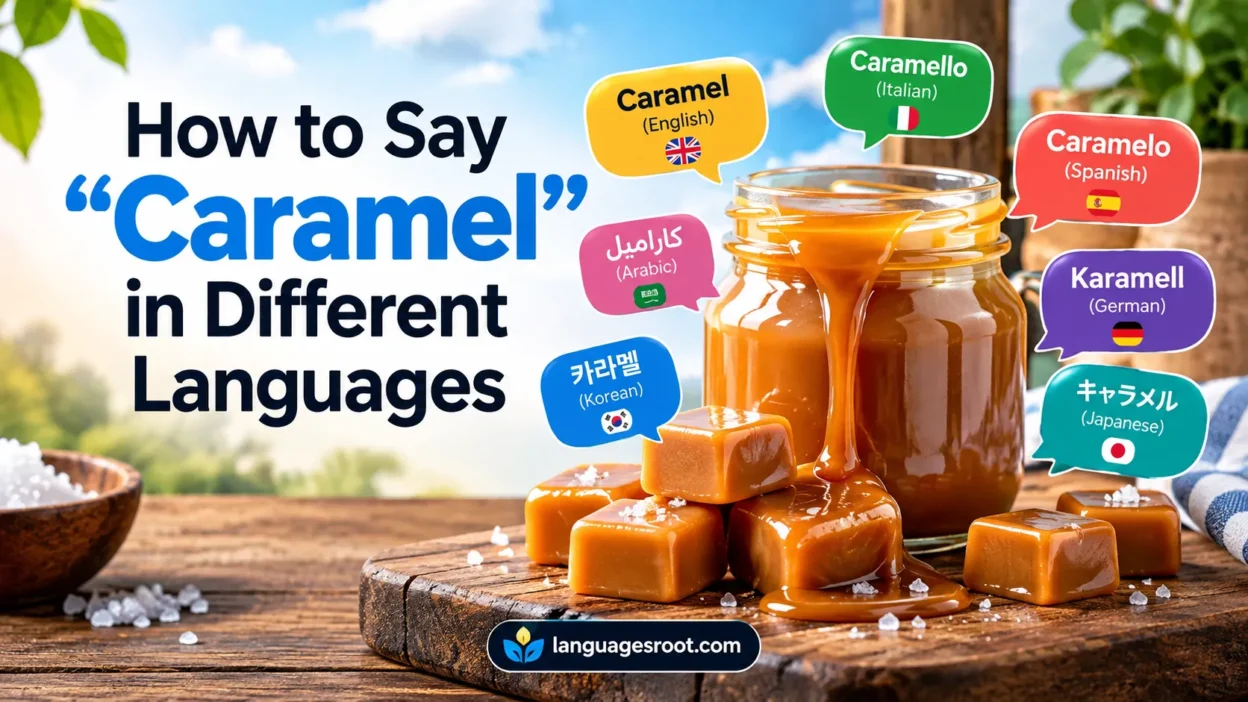
Caramel is a rich sweet confection made by heating sugar, creating a golden-brown color and deep flavor. Learning caramel in different languages helps with vocabulary, food words, spelling, and pronunciation when exploring global cuisine. Moreover, these translations can help when reading international recipes or ordering desserts abroad. Each language may use a different native word, sound, or spelling convention for this familiar sweet.
This guide explores caramel translations across languages, including French, Spanish, German, Mandarin, and Portuguese. You will also discover useful pronunciation details, example sentence patterns, and regional information. Additionally, understanding language varieties and dialect differences can make your speech more natural and accurate. Whether discussing caramel sauce, caramel candy, or desserts, these terms add useful cultural fluency to everyday conversations.
Interesting Facts About Caramel
- Caramel is both a food and a color term. It can refer to the cooked sugar confection, caramel sauce, or a warm yellow-brown shade.
- The English word caramel ultimately has a long history of borrowing through Romance languages. Its development is commonly connected with French caramel, Spanish caramelo, Portuguese caramelo, and earlier Latin forms.
- Many European languages use words that look very similar to English caramel, including French caramel, German Karamell, Dutch karamel, Swedish karamell, and Czech karamel.
- Mandarin Chinese uses 焦糖 (jiāotáng) for caramel. The expression is built from characters associated with browning or scorching and sugar, rather than simply copying the English pronunciation.
- Some languages have more than one useful word depending on the product. For example, Finnish can use karamelli for caramel confectionery, while kinuski is commonly associated with caramel sauce or a caramel-like topping.
- Pronunciation is not identical across English-speaking regions. In American English, both two-syllable and three-syllable pronunciations are widely heard.
- Borrowed food vocabulary often becomes adapted to the spelling and sound system of the receiving language. Japanese, for example, writes caramel as キャラメル (kyarameru) in katakana.
What Does Caramel Mean?
Caramel generally means a sweet substance produced by heating sugar until it undergoes caramelization and develops a characteristic golden to deep brown color, rich aroma, and complex flavor. It may be soft, chewy, hard, liquid, or creamy depending on how it is prepared and what other ingredients are added.
The word can describe several related things. It may mean the cooked sugar itself, a caramel candy, a caramel sauce used on desserts, or a caramel-flavored ingredient. In everyday descriptions, caramel can also refer to a warm yellow-brown color.
Context therefore matters. A baker might talk about making caramel, a café might offer caramel syrup, a confectioner might sell caramel candies, and a clothing brand might describe a fabric as caramel-colored. The same basic word can cover these related meanings, but some languages use different words for specific products.
Why Can Caramel Have Different Translations?
Caramel does not have one universal translation because languages have developed different ways of naming the ingredient, confection, sauce, and color.
Several factors can influence the wording:
- Meaning: A word for caramel candy may differ from a word for caramel sauce.
- Context: A recipe may use more technical vocabulary than casual conversation.
- Regional usage: Different countries can prefer different borrowed or traditional forms.
- Language history: Some languages borrowed the word from French or another European language, while others developed a native descriptive term.
- Writing system: Japanese, Korean, Chinese, Arabic, Hebrew, and many other languages represent the word using scripts other than the Latin alphabet.
- Pronunciation: A borrowed word is often reshaped to fit the sounds available in the target language.
- Grammar: Nouns may change according to gender, case, number, or grammatical role.
- Product type: A language may distinguish between caramel candy, caramelized sugar, caramel sauce, and caramel color.
For this reason, the most useful translation is usually the natural word used by speakers for the intended meaning, not a word-for-word reconstruction of the English spelling.
European Languages
Europe contains several major language families, so caramel can appear in closely related forms while still having different pronunciation, spelling, or grammatical behavior. Romance languages often retain forms related to caramel or caramelo, while Germanic and Slavic languages have adapted versions of the borrowed word. Some languages also use a slightly different form for a caramel sweet or caramelized sugar.
| 🌍 Language | Country/Region | Translation | Pronunciation | Example Sentence |
| English | International | caramel | KARR-uh-mel / KARR-mel | I added caramel to the dessert. |
| American English 🇺🇸 | United States | caramel | KARR-uh-mel / KARR-mel | I love caramel on ice cream. |
| British English 🇬🇧 | United Kingdom | caramel | KARR-uh-mel | The pudding has a caramel topping. |
| Australian English 🇦🇺 | Australia | caramel | KARR-uh-mel | She bought a caramel slice. |
| Spanish | Spain, Latin America | caramelo | ka-ra-MEH-lo | Me gusta el caramelo. Meaning: I like caramel. |
| French | France, Francophone regions | caramel | ka-ra-MEL | J’aime le caramel. Meaning: I like caramel. |
| German | Germany, Austria, Switzerland | Karamell | ka-ra-MELL | Ich mag Karamell. Meaning: I like caramel. |
| Italian | Italy, Switzerland | caramello | ka-ra-MELL-lo | Mi piace il caramello. Meaning: I like caramel. |
| Portuguese | Portugal, Brazil | caramelo | ka-ra-MEH-lo | Eu gosto de caramelo. Meaning: I like caramel. |
| Dutch | Netherlands, Belgium | karamel | ka-ra-MEL | Ik hou van karamel. Meaning: I like caramel. |
| Swedish | Sweden, Finland | karamell | ka-ra-MELL | Jag gillar karamell. Meaning: I like caramel. |
| Norwegian | Norway | karamell | ka-ra-MELL | Jeg liker karamell. Meaning: I like caramel. |
| Danish | Denmark | karamel | ka-ra-MEL | Jeg kan lide karamel. Meaning: I like caramel. |
| Finnish | Finland | karamelli | KA-ra-mel-li | Pidän karamellista. Meaning: I like caramel. |
| Icelandic | Iceland | karamella | ka-ra-MEL-la | Mér finnst karamella góð. Meaning: I think caramel is good. |
| Irish | Ireland | caramal | KARR-uh-mal | Is maith liom caramal. Meaning: I like caramel. |
| Welsh | Wales | caramel | ka-RA-mel | Rwy’n hoffi caramel. Meaning: I like caramel. |
| Polish | Poland | karmel | KAR-mel | Lubię karmel. Meaning: I like caramel. |
| Czech | Czech Republic | karamel | KA-ra-mel | Mám rád karamel. Meaning: I like caramel. |
| Slovak | Slovakia | karamel | KA-ra-mel | Mám rád karamel. Meaning: I like caramel. |
| Ukrainian | Ukraine | карамель | ka-ra-MEL | Я люблю карамель. Meaning: I love caramel. |
| Russian | Russia and other Russian-speaking regions | карамель | ka-ra-MYEL | Я люблю карамель. Meaning: I love caramel. |
| Romanian | Romania, Moldova | caramel | ka-ra-MEL | Îmi place caramelul. Meaning: I like caramel. |
| Hungarian | Hungary | karamell | KA-ra-mell | Szeretem a karamellt. Meaning: I like caramel. |
| Greek | Greece, Cyprus | καραμέλα | ka-ra-ME-la | Μου αρέσει η καραμέλα. Meaning: I like caramel. |
| Bulgarian | Bulgaria | карамел | ka-ra-MEL | Обичам карамел. Meaning: I love caramel. |
| Croatian | Croatia | karamela | ka-ra-ME-la | Volim karamelu. Meaning: I like caramel. |
| Serbian | Serbia and surrounding regions | карамела | ka-ra-ME-la | Волим карамелу. Meaning: I like caramel. |
| Slovenian | Slovenia | karamela | ka-ra-ME-la | Obožujem karamelo. Meaning: I love caramel. |
| Lithuanian | Lithuania | karamelė | ka-ra-me-LEH | Aš mėgstu karamelę. Meaning: I like caramel. |
| Latvian | Latvia | karamele | ka-ra-MEH-le | Man garšo karamele. Meaning: I like caramel. |
| Estonian | Estonia | karamell | KA-ra-mell | Mulle meeldib karamell. Meaning: I like caramel. |
| Albanian | Albania, Kosovo | karamel | ka-ra-MEL | Më pëlqen karameli. Meaning: I like caramel. |
| Basque | Basque Country | karamelu | ka-ra-MEH-lu | Karamelua gustatzen zait. Meaning: I like caramel. |
| Catalan | Catalonia, Valencia, Balearic Islands | caramel | ka-ra-MEL | M’agrada el caramel. Meaning: I like caramel. |
| Maltese | Malta | karamella | ka-ra-MEL-la | Jogħġobni l-karamella. Meaning: I like caramel. |
| Macedonian | North Macedonia | карамела | ka-ra-ME-la | Сакам карамела. Meaning: I like caramel. |
| Belarusian | Belarus | карамель | ka-ra-MEL | Я люблю карамель. Meaning: I love caramel. |
| Bosnian | Bosnia and Herzegovina | karamela | ka-ra-ME-la | Volim karamelu. Meaning: I like caramel. |
English Varieties
American English, British English, and Australian English use the same spelling, caramel. The main difference readers may notice is pronunciation rather than vocabulary. American English has both two-syllable and three-syllable pronunciations, while British pronunciation is commonly represented with three syllables. Regional speech can still vary within each country.
The important point is that these varieties should not be treated as completely different translations. They represent regional varieties of English, not separate languages.
Asian Languages
Asia contains an enormous range of languages and writing systems. Some Asian languages borrow a form of the international word caramel, while others use a descriptive expression or a word that developed through local culinary vocabulary. Mandarin is a particularly useful example because 焦糖 (jiāotáng) differs substantially from the European-derived forms found in many neighboring languages.
| 🌍 Language | Country/Region | Translation | Pronunciation | Example Sentence |
| Mandarin Chinese | China, Taiwan, Singapore | 焦糖 | jiāo táng | 我喜欢焦糖。 Meaning: I like caramel. |
| Cantonese | Hong Kong, Guangdong | 焦糖 | ziu1 tong4 | 我鍾意焦糖。 Meaning: I like caramel. |
| Japanese | Japan | キャラメル | kyarameru | キャラメルが好きです。 Meaning: I like caramel. |
| Korean | South Korea, North Korea | 캐러멜 | kae-reo-mel | 저는 캐러멜을 좋아해요. Meaning: I like caramel. |
| Hindi | India | कैरेमल | kai-re-mul | मुझे कैरेमल पसंद है। Meaning: I like caramel. |
| Urdu | Pakistan, India | کیریمل | KAY-ri-mel | مجھے کیریمل پسند ہے۔ Meaning: I like caramel. |
| Bengali | Bangladesh, India | ক্যারামেল | kya-ra-mel | আমি ক্যারামেল পছন্দ করি। Meaning: I like caramel. |
| Punjabi | India, Pakistan | ਕੈਰਾਮਲ | kai-ra-mal | ਮੈਨੂੰ ਕੈਰਾਮਲ ਪਸੰਦ ਹੈ। Meaning: I like caramel. |
| Gujarati | India | કારામેલ | kaa-ra-mel | મને કારામેલ ગમે છે. Meaning: I like caramel. |
| Marathi | India | कॅरॅमल | kae-ra-mel | मला कॅरॅमल आवडते. Meaning: I like caramel. |
| Tamil | India, Sri Lanka | கேரமல் | kae-ra-mal | எனக்கு கேரமல் பிடிக்கும். Meaning: I like caramel. |
| Telugu | India | కారమెల్ | kaa-ra-mel | నాకు కారమెల్ ఇష్టం. Meaning: I like caramel. |
| Kannada | India | ಕ್ಯಾರಮೆಲ್ | kya-ra-mel | ನನಗೆ ಕ್ಯಾರಮೆಲ್ ಇಷ್ಟ. Meaning: I like caramel. |
| Malayalam | India | കാരമൽ | kaa-ra-mal | എനിക്ക് കാരമൽ ഇഷ്ടമാണ്. Meaning: I like caramel. |
| Nepali | Nepal | क्यारामेल | kya-ra-mel | मलाई क्यारामेल मन पर्छ। Meaning: I like caramel. |
| Sinhala | Sri Lanka | කැරමල් | kae-ra-mal | මම කැරමල් වලට කැමතියි. Meaning: I like caramel. |
| Thai | Thailand | คาราเมล | kaa-raa-mel | ฉันชอบคาราเมล. Meaning: I like caramel. |
| Vietnamese | Vietnam | caramen / kẹo caramen | ka-ra-men | Tôi thích caramen. Meaning: I like caramel. |
| Indonesian | Indonesia | karamel | ka-ra-MEL | Saya suka karamel. Meaning: I like caramel. |
| Malay | Malaysia, Brunei, Singapore | karamel | ka-ra-MEL | Saya suka karamel. Meaning: I like caramel. |
| Filipino | Philippines | karamelo | ka-ra-MEH-lo | Gusto ko ang karamelo. Meaning: I like caramel. |
| Burmese | Myanmar | ကာရာမယ် | ka-ra-mel | ကာရာမယ်ကို ကြိုက်တယ်။ Meaning: I like caramel. |
| Khmer | Cambodia | ការ៉ាមែល | ka-ra-mel | ខ្ញុំចូលចិត្តការ៉ាមែល។ Meaning: I like caramel. |
| Lao | Laos | ຄາຣາເມວ | kha-ra-mel | ຂ້ອຍມັກຄາຣາເມວ. Meaning: I like caramel. |
| Mongolian | Mongolia | карамель | ka-ra-MEL | Би карамельд дуртай. Meaning: I like caramel. |
| Kazakh | Kazakhstan | карамель | ka-ra-MEL | Мен карамельді жақсы көремін. Meaning: I like caramel. |
| Uzbek | Uzbekistan | karamel | ka-ra-MEL | Men karamelni yaxshi ko’raman. Meaning: I like caramel. |
Notes on Asian Usage
Some Asian languages use adapted loanwords, which makes the translation look familiar to English speakers. Japanese キャラメル is a good example. It represents the borrowed word in the Japanese writing system, and its pronunciation follows Japanese phonological patterns.
Mandarin works differently. 焦糖 is a native Chinese compound rather than a simple transliteration of caramel. Cantonese also uses 焦糖, although its pronunciation follows Cantonese rather than Mandarin pronunciation.
Indian languages frequently represent the internationally familiar food name through their own scripts. Pronunciation can vary naturally according to the phonological system of each language and region, so the romanizations above are reader-friendly approximations, not replacements for native pronunciation.
African Languages
Africa is home to extraordinary linguistic diversity, including Niger-Congo, Afroasiatic, and other language families. Food vocabulary can be borrowed, adapted, or expressed descriptively depending on the language. The following examples focus on forms that are understandable in ordinary contexts and avoid treating any one language as representative of an entire country.
| 🌍 Language | Country/Region | Translation | Pronunciation | Example Sentence |
| Swahili | East Africa | karameli | ka-ra-MEH-lee | Ninapenda karameli. Meaning: I like caramel. |
| Afrikaans | South Africa, Namibia | karamel | ka-ra-MEL | Ek hou van karamel. Meaning: I like caramel. |
| Zulu | South Africa | ikharameli | ee-kha-ra-MEH-lee | Ngiyathanda ikharameli. Meaning: I like caramel. |
| Xhosa | South Africa | icaramel | ee-ka-ra-MEL | Ndiyayithanda icaramel. Meaning: I like caramel. |
| Amharic | Ethiopia | ካራሜል | ka-ra-mel | ካራሜል እወዳለሁ። Meaning: I like caramel. |
| Yoruba | Nigeria, Benin | karameli | ka-ra-MEH-lee | Mo fẹ́ràn karameli. Meaning: I like caramel. |
| Igbo | Nigeria | karamel | ka-ra-MEL | Karamel na-amasị m. Meaning: I like caramel. |
| Hausa | Nigeria, Niger and surrounding regions | karameli | ka-ra-MEH-lee | Ina son karameli. Meaning: I like caramel. |
| Somali | Somalia, Somaliland, Djibouti | karamell | ka-ra-MELL | Waxaan jeclahay karamell. Meaning: I like caramel. |
| Shona | Zimbabwe | karameli | ka-ra-MEH-lee | Ndinoda karameli. Meaning: I like caramel. |
| Sesotho | Lesotho, South Africa | karameli | ka-ra-MEH-lee | Ke rata karameli. Meaning: I like caramel. |
| Setswana | Botswana, South Africa | karameli | ka-ra-MEH-lee | Ke rata karameli. Meaning: I like caramel. |
| Kinyarwanda | Rwanda | karameli | ka-ra-MEH-lee | Nkunda karameli. Meaning: I like caramel. |
These forms illustrate an important point about multilingual food vocabulary: loanwords can become localized. A borrowed term may acquire a new ending, spelling, or pronunciation while remaining recognizable to speakers. Swahili sources, for example, record both karmeli and karameli for caramel.
Middle Eastern Languages
The Middle East contains several unrelated language traditions, so there is no single regional translation for caramel.Taraduf, Persian, Hebrew, Kurdish, Turkish, Armenian, Georgian, and Azerbaijani each have their own linguistic systems and usage patterns. muradafat also requires special care because Modern Standard Arabic and regional dialects can differ in everyday vocabulary and pronunciation.
Also Read: How to Say City in Different Languages
| 🌍 Language | Country/Region | Translation | Pronunciation | Example Sentence |
| Arabic | Middle East and North Africa | كراميل | ka-ra-MEEL | أحب الكراميل. Meaning: I like caramel. |
| Persian | Iran, Afghanistan, Tajik cultural areas | کارامل | ka-ra-MEL | من کارامل دوست دارم. Meaning: I like caramel. |
| Hebrew | Israel | קרמל | kar-MEL | אני אוהב קרמל. Meaning: I like caramel. |
| Kurdish | Kurdistan regions | karamel | ka-ra-MEL | Ez karamel hez dikim. Meaning: I like caramel. |
| Turkish | Turkey, Cyprus and surrounding communities | karamel | ka-ra-MEL | Karameli seviyorum. Meaning: I like caramel. |
| Armenian | Armenia and Armenian-speaking communities | կարամել | ka-ra-MEL | Ես սիրում եմ կարամել։ Meaning: I like caramel. |
| Georgian | Georgia | კარამელი | ka-ra-ME-li | მე კარამელი მიყვარს. Meaning: I like caramel. |
| Azerbaijani | Azerbaijan | karamel | ka-ra-MEL | Mən karameli sevirəm. Meaning: I like caramel. |
Arabic deserves particular attention because كراميل is widely recognizable, but everyday pronunciation and usage can differ between countries. For a general international reference, the Modern Standard Arabic form is the safest broad choice. Regional speech may adapt the pronunciation or use a locally familiar food term.
Quick Reference: Caramel in Different Languages
| Language | Translation |
| English | caramel |
| American English | caramel |
| British English | caramel |
| Australian English | caramel |
| Spanish | caramelo |
| French | caramel |
| German | Karamell |
| Italian | caramello |
| Portuguese | caramelo |
| Dutch | karamel |
| Swedish | karamell |
| Norwegian | karamell |
| Danish | karamel |
| Finnish | karamelli |
| Icelandic | karamella |
| Irish | caramal |
| Welsh | caramel |
| Polish | karmel |
| Czech | karamel |
| Slovak | karamel |
| Ukrainian | карамель |
| Russian | карамель |
| Romanian | caramel |
| Hungarian | karamell |
| Greek | καραμέλα |
| Bulgarian | карамел |
| Croatian | karamela |
| Serbian | карамела |
| Slovenian | karamela |
| Lithuanian | karamelė |
| Latvian | karamele |
| Estonian | karamell |
| Albanian | karamel |
| Basque | karamelu |
| Catalan | caramel |
| Maltese | karamella |
| Macedonian | карамела |
| Belarusian | карамель |
| Bosnian | karamela |
| Mandarin Chinese | 焦糖 |
| Cantonese | 焦糖 |
| Japanese | キャラメル |
| Korean | 캐러멜 |
| Hindi | कैरेमल |
| Urdu | کیریمل |
| Bengali | ক্যারামেল |
| Punjabi | ਕੈਰਾਮਲ |
| Gujarati | કારામેલ |
| Marathi | कॅरॅमल |
| Tamil | கேரமல் |
| Telugu | కారమెల్ |
| Kannada | ಕ್ಯಾರಮೆಲ್ |
| Malayalam | കാരമൽ |
| Nepali | क्यारामेल |
| Sinhala | කැරමල් |
| Thai | คาราเมล |
| Vietnamese | caramen |
| Indonesian | karamel |
| Malay | karamel |
| Filipino | karamelo |
| Burmese | ကာရာမယ် |
| Khmer | ការ៉ាមែល |
| Lao | ຄາຣາເມວ |
| Mongolian | карамель |
| Kazakh | карамель |
| Uzbek | karamel |
| Swahili | karameli |
| Afrikaans | karamel |
| Zulu | ikharameli |
| Xhosa | icaramel |
| Amharic | ካራሜል |
| Yoruba | karameli |
| Igbo | karamel |
| Hausa | karameli |
| Somali | karamell |
| Shona | karameli |
| Sesotho | karameli |
| Setswana | karameli |
| Kinyarwanda | karameli |
| Arabic | كراميل |
| Persian | کارامل |
| Hebrew | קרמל |
| Kurdish | karamel |
| Turkish | karamel |
| Armenian | կարամել |
| Georgian | კარამელი |
| Azerbaijani | karamel |
How to Choose the Right Translation
The best caramel translation depends mainly on what you are talking about.
In case you are discussing the sweet confection itself, use the ordinary noun shown in the tables. If you are talking about a dessert topping, some languages may use a more specific expression for caramel sauce. If you are describing a color, the target language may use a phrase meaning caramel-colored rather than the noun for the food.
You should also consider the audience. A formal recipe, a restaurant menu, and a casual message may use slightly different vocabulary. When speaking with someone from a particular country, a regional form may sound more natural than a generalized international form.
For languages with multiple possibilities, prioritize the standard form that clearly communicates the intended meaning. When ordering food or asking about an ingredient, clarity matters more than producing a perfectly literal translation.
Common Mistakes When Translating Caramel
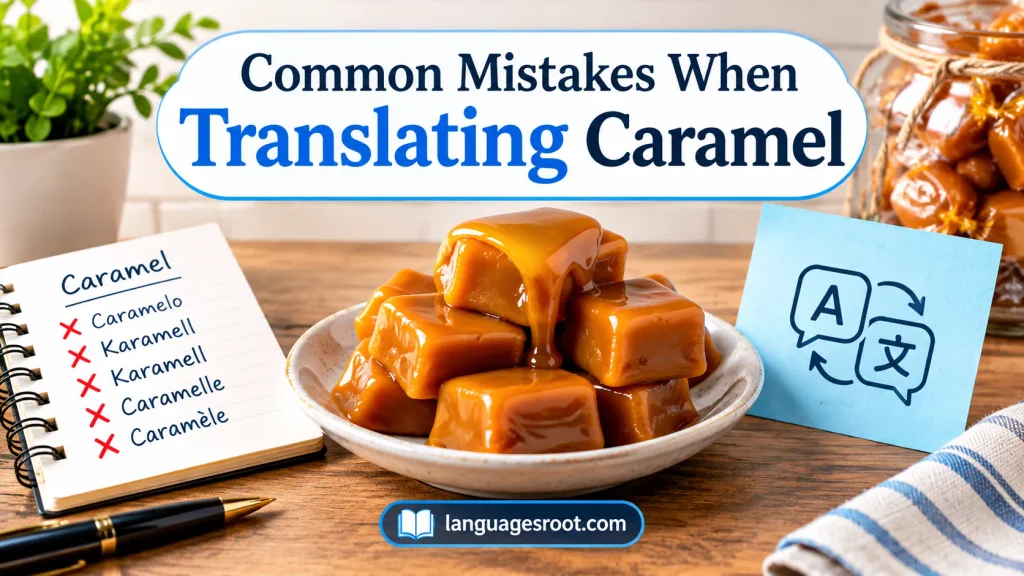
One of the most common mistakes is assuming that every language simply changes the spelling of caramel. Many languages do use a recognizable borrowing, but Mandarin, for example, uses 焦糖, while Spanish uses caramelo.
Other mistakes include:
- Translating individual letters instead of the word: A borrowed word should be adapted naturally to the target language.
- Confusing caramel with caramel sauce: A language may distinguish the confection from the liquid topping.
- Ignoring grammatical form: Some languages change the ending according to case, gender, or sentence position.
- Using an English pronunciation: A borrowed word may have a completely different local pronunciation.
- Mixing regional forms: A word common in one country may not be the preferred form everywhere.
- Ignoring the writing system: Romanization helps learners, but native speakers normally use their standard script.
- Assuming color and food terms are identical: A language may use a separate adjective or compound for caramel color.
- Using an overly literal translation: The most natural expression is more useful than a mechanically translated one.
Why Learn Caramel in Different Languages?
Learning a simple word such as caramel can be a surprisingly useful language-learning exercise. Food vocabulary appears frequently in restaurants, recipes, menus, supermarkets, travel conversations, and everyday social situations.
It can also help learners notice how languages borrow words. French, German, Dutch, Scandinavian languages, and several Slavic languages use forms that visibly resemble one another, while Mandarin takes a different lexical approach. Japanese and Korean show how an internationally familiar food word can be adapted into another writing and sound system.
Learning these small differences encourages better pronunciation, broader vocabulary, and cultural awareness. It can also make a conversation more personal when you use a word naturally in another person’s language.
Frequently Asked Questions
How do you say caramel in different languages?
You can say caramel in English and French, caramelo in Spanish and Portuguese, and Karamell in German. In Mandarin, caramel is 焦糖 (jiāotáng), while Italian uses caramello.
What is the most natural translation of caramel?
The best caramel translation depends on the language and context. For example, Spanish uses caramelo, French uses caramel, and Mandarin uses 焦糖.
Does caramel pronunciation change between languages?
Yes, pronunciation changes because each language has its own sound system. English can use two or three syllables, while other languages adapt the word to local speech patterns.
Is caramel the same word for candy and sauce?
Not always. Some languages use different terms for caramel candy, caramel sauce, caramelized sugar, and caramel color, so context is important.
Why does Mandarin use 焦糖 instead of caramel?
Mandarin uses 焦糖 (jiāotáng), a native term linked to browned or scorched sugar. This shows how food words can develop differently across languages instead of copying English.
Conclusion
Learning caramel in different languages reveals how food words, pronunciation, and language varieties change across cultures. From caramelo in Spanish and Portuguese to Karamell in German and 焦糖 in Mandarin, each caramel translation reflects its own linguistic system and context. Understanding these differences can improve vocabulary and make conversations about desserts, recipes, and travel more natural.