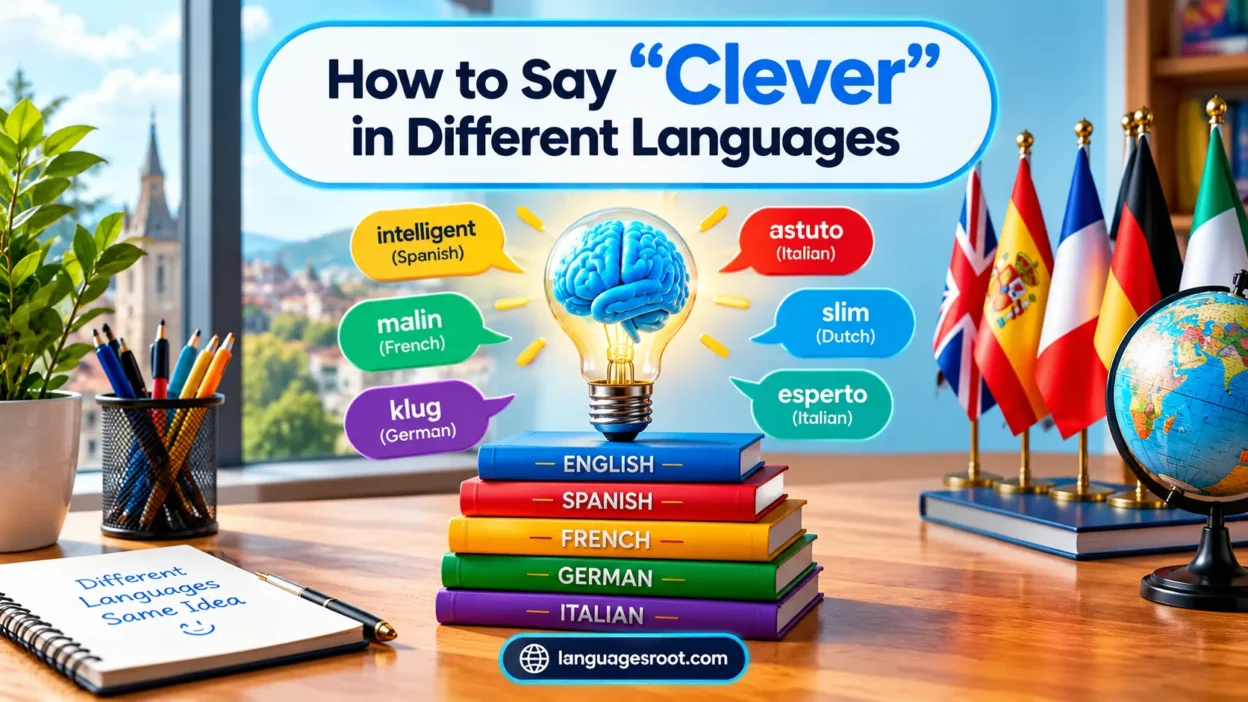
The word clever describes someone who can think creatively, learn quickly, and solve problems well. It can also express intelligence, resourcefulness, or a practical way of finding solutions. However, clever translations can change with cultural differences, context, and language differences. Learning how to say clever in different languages helps build a stronger language foundation for everyday communication.
This guide explores how to say clever in different languages with clear translation, English pronunciation, and example sentences. You can also discover synonyms, contextual meaning, and semantic variations across world languages. Therefore, these expressions can help with language learning, vocabulary building, and meaningful conversations while you communicate across cultures.
Interesting Facts About “Clever”
- The English word clever commonly describes intelligence, quick thinking, or skill.
- In British English, “clever” is a very common everyday compliment.
- American English often uses words such as smart, bright, or intelligent in situations where British English might use “clever.”
- Cleverness can refer to people, ideas, solutions, designs, jokes, inventions, and strategies.
- Some languages have separate expressions for intellectual intelligence and practical cleverness.
- A clever person may be described as someone who learns quickly and understands difficult ideas.
- Cleverness can also refer to creativity, especially when someone finds an unusual solution.
- The meaning of a translated word can change slightly depending on context.
- Some cultures use words for cleverness that also suggest wisdom or good judgment.
- A clever idea is not always the same as an intelligent person, so context matters when translating the word.
- Learning synonyms can help you avoid using the same expression repeatedly.
- Complimenting someone’s cleverness can be a friendly way to recognize their abilities.
- Pronunciation is important because similar-looking words can sound very different across languages.
- Many languages have masculine and feminine forms of adjectives, so the exact word can change depending on the person being described.
- In some languages, the best translation depends on whether “clever” means intelligent, skillful, witty, or crafty.
How to Say “Clever” in Different Languages
The following translations focus on common ways to express clever, smart, intelligent, bright, or quick-witted. Because languages do not always have one exact equivalent, the synonym and example columns provide useful context.
European Languages
European languages contain many different ways to describe intelligence and cleverness. Some expressions focus on intelligence, while others highlight wisdom, quick thinking, skill, or creativity. The translations below use common forms where possible, but natural usage can vary by country and context.
| Language | Country/Region | Translation | Pronunciation | Synonyms | Example sentence |
| 🇬🇧 British English | United Kingdom | Clever | KLEV-er | Smart, bright, sharp | She is very clever. |
| 🇺🇸 American English | United States | Smart | SMART | Clever, bright, intelligent | He is a smart student. |
| 🇦🇺 Australian English | Australia | Clever | KLEV-er | Smart, bright, sharp | That was a clever idea. |
| 🇪🇸 Spanish | Spain, Latin America | Inteligente | in-teh-lee-HEN-teh | Listo, brillante | Ella es muy inteligente. |
| 🇫🇷 French | France, Belgium | Intelligent / Intelligente | an-tay-lee-ZHAHN | Astucieux, brillant | Il est très intelligent. |
| 🇩🇪 German | Germany, Austria | Klug | KLOOK | Schlau, intelligent | Er ist sehr klug. |
| 🇮🇹 Italian | Italy | Intelligente | in-tel-lee-JEN-teh | Astuto, brillante | Lei è molto intelligente. |
| 🇵🇹 Portuguese | Portugal, Brazil | Inteligente | in-teh-lee-ZHEN-chee | Esperto, esperto | Ele é muito inteligente. |
| 🇳🇱 Dutch | Netherlands, Belgium | Slim | SLIM | Intelligent, verstandig | Hij is erg slim. |
| 🇸🇪 Swedish | Sweden | Klok | KLOOK | Smart, intelligent | Hon är mycket klok. |
| 🇳🇴 Norwegian | Norway | Klok | KLOOK | Smart, intelligent | Han er veldig klok. |
| 🇩🇰 Danish | Denmark | Klog | KLOH | Intelligent, skarp | Hun er meget klog. |
| 🇫🇮 Finnish | Finland | Älykäs | AHL-y-kas | Fiksu, viisas | Hän on erittäin älykäs. |
| 🇮🇸 Icelandic | Iceland | Snjall | SNYATL | Klár, gáfaður | Hann er mjög snjall. |
| 🇮🇪 Irish | Ireland | Cliste | KLI-shteh | Smart, intelligent | Tá sí cliste. |
| 🏴 Welsh | Wales | Clyfar | KLUH-var | Doeth, call | Mae hi’n glyfar. |
| 🇵🇱 Polish | Poland | Sprytny | SPRIT-nih | Inteligentny, bystry | On jest bardzo sprytny. |
| 🇨🇿 Czech | Czech Republic | Chytrý | KHIT-ree | Inteligentní, bystrý | On je velmi chytrý. |
| 🇸🇰 Slovak | Slovakia | Šikovný | SHEE-kov-nee | Múdry, bystrý | On je veľmi šikovný. |
| 🇭🇺 Hungarian | Hungary | Okos | OH-kosh | Értelmes, ügyes | Ő nagyon okos. |
| 🇷🇴 Romanian | Romania | Inteligent | in-teh-lee-JENT | Deștept, isteț | El este foarte inteligent. |
| 🇧🇬 Bulgarian | Bulgaria | Умен | OO-men | Интелигентен, хитър | Той е много умен. |
| 🇷🇺 Russian | Russia | Умный | OOM-ny | Сообразительный, умный | Он очень умный. |
| 🇺🇦 Ukrainian | Ukraine | Розумний | roh-ZOOM-nyy | Кмітливий, розумний | Він дуже розумний. |
| 🇧🇾 Belarusian | Belarus | Разумны | rah-ZOOM-ny | Разумны, кемлівы | Ён вельмі разумны. |
| 🇱🇹 Lithuanian | Lithuania | Protingas | proh-TING-as | Gudrus, sumanus | Jis labai protingas. |
| 🇱🇻 Latvian | Latvia | Gudrs | GOODRS | Asprātīgs, vieds | Viņš ir ļoti gudrs. |
| 🇪🇪 Estonian | Estonia | Tark | TARK | Arukas, nutikas | Ta on väga tark. |
| 🇬🇷 Greek | Greece | Έξυπνος | EX-ip-nos | Ικανός, ευφυής | Είναι πολύ έξυπνος. |
| 🇹🇷 Turkish | Turkey | Zeki | ZEH-kee | Akıllı, becerikli | O çok zeki. |
| 🇦🇱 Albanian | Albania, Kosovo | I zgjuar | ee ZG-yoo-ar | I mençur, inteligjent | Ai është shumë i zgjuar. |
| 🇭🇷 Croatian | Croatia | Pametan | PAH-meh-tan | Bistar, mudar | On je vrlo pametan. |
| 🇷🇸 Serbian | Serbia | Pametan | PAH-meh-tan | Bistar, mudar | On je veoma pametan. |
| 🇸🇮 Slovenian | Slovenia | Pameten | pah-MEH-ten | Bister, inteligenten | On je zelo pameten. |
| 🇧🇦 Bosnian | Bosnia and Herzegovina | Pametan | PAH-meh-tan | Bistar, mudar | On je veoma pametan. |
| 🇲🇰 Macedonian | North Macedonia | Паметен | PAH-meh-ten | Умен, интелигентен | Тој е многу паметен. |
| 🇲🇹 Maltese | Malta | Intelliġenti | in-tel-lee-JEN-tee | Brillanti, għaqli | Huwa intelliġenti ħafna. |
Asian Languages

Asian languages offer rich vocabulary for intelligence, wisdom, skill, and quick thinking. In some cultures, describing someone as clever may imply that the person is knowledgeable or wise. In others, the word can emphasize practical ability or sharp thinking.
| Language | Country/Region | Translation | Pronunciation | Synonyms | Example sentence |
| 🇨🇳 Mandarin Chinese | China, Taiwan | 聪明 | cōng míng | 智慧, 机灵 | 他很聪明。 |
| 🇯🇵 Japanese | Japan | 賢い | kashikoi | 頭がいい, 聡明 | 彼はとても賢いです。 |
| 🇰🇷 Korean | South Korea | 똑똑한 | ttok-ttok-han | 영리한, 지혜로운 | 그는 정말 똑똑해요. |
| 🇮🇳 Hindi | India | चतुर | cha-tur | होशियार, बुद्धिमान | वह बहुत चतुर है। |
| 🇵🇰 Urdu | Pakistan | ہوشیار | hosh-yaar | ذہین, عقلمند | وہ بہت ہوشیار ہے۔ |
| 🇧🇩 Bengali | Bangladesh, India | বুদ্ধিমান | bud-dhi-maan | চালাক, মেধাবী | সে খুব বুদ্ধিমান। |
| 🇮🇳 Punjabi | India, Pakistan | ਸਿਆਣਾ | si-aa-naa | ਹੁਸ਼ਿਆਰ, ਅਕਲਮੰਦ | ਉਹ ਬਹੁਤ ਸਿਆਣਾ ਹੈ। |
| 🇳🇵 Nepali | Nepal | चलाख | cha-lakh | बुद्धिमान, होशियार | ऊ धेरै चलाख छ। |
| 🇱🇰 Sinhala | Sri Lanka | දක්ෂ | dak-sha | බුද්ධිමත්, නුවණැති | ඔහු ඉතා දක්ෂයි. |
| 🇮🇳 Tamil | India, Sri Lanka | புத்திசாலி | put-ti-SAA-lee | அறிவாளி, திறமையான | அவன் மிகவும் புத்திசாலி. |
| 🇮🇳 Telugu | India | తెలివైన | teh-lee-vaa-ye-na | మేధావి, చురుకైన | అతను చాలా తెలివైనవాడు. |
| 🇮🇳 Kannada | India | ಬುದ್ಧಿವಂತ | bud-dhi-vanta | ಚತುರ, ಜಾಣ | ಅವನು ತುಂಬಾ ಬುದ್ಧಿವಂತ. |
| 🇮🇳 Malayalam | India | ബുദ്ധിമാൻ | bud-dhi-maan | മിടുക്കൻ, വിവേകി | അവൻ വളരെ ബുദ്ധിമാനാണ്. |
| 🇮🇳 Marathi | India | हुशार | hoo-shaar | बुद्धिमान, चतुर | तो खूप हुशार आहे. |
| 🇮🇳 Gujarati | India | હોશિયાર | ho-shi-yaar | બુદ્ધિશાળી, ચાલાક | તે ખૂબ હોશિયાર છે. |
| 🇮🇷 Persian | Iran, Afghanistan | باهوش | baa-hoosh | زیرک, هوشمند | او خیلی باهوش است. |
| 🇦🇫 Pashto | Afghanistan | هوښیار | khosh-yaar | ځیرک, پوه | هغه ډېر هوښیار دی. |
| 🇦🇲 Armenian | Armenia | Խելացի | kheh-LA-tsee | Իմաստուն, հնարամիտ | Նա շատ խելացի է։ |
| 🇬🇪 Georgian | Georgia | ჭკვიანი | chkviani | გონიერი, ბრძენი | ის ძალიან ჭკვიანია. |
| 🇮🇱 Hebrew | Israel | חכם | kha-KHAM | נבון, פיקח | הוא מאוד חכם. |
| 🇮🇩 Indonesian | Indonesia | Cerdas | CHER-das | Pintar, pandai | Dia sangat cerdas. |
| 🇲🇾 Malay | Malaysia, Brunei | Bijak | BEE-jak | Pandai, pintar | Dia sangat bijak. |
| 🇹🇭 Thai | Thailand | ฉลาด | cha-LAAT | เก่ง, ปราดเปรื่อง | เขาฉลาดมาก |
| 🇻🇳 Vietnamese | Vietnam | Thông minh | tong min | Sáng suốt, lanh lợi | Anh ấy rất thông minh. |
| 🇵🇭 Filipino | Philippines | Matalino | ma-ta-LEE-no | Marunong, mahusay | Siya ay napakatalino. |
| 🇲🇳 Mongolian | Mongolia | Ухаалаг | oo-KHAH-lag | Сэргэлэн, ухаантай | Тэр их ухаалаг. |
| 🇰🇿 Kazakh | Kazakhstan | Ақылды | ak-ULL-dy | Зерек, білімді | Ол өте ақылды. |
| 🇺🇿 Uzbek | Uzbekistan | Aqlli | AK-lee | Zukko, dono | U juda aqlli. |
| 🇦🇿 Azerbaijani | Azerbaijan | Ağıllı | ah-uh-LUH | Zəkalı, zirək | O çox ağıllıdır. |
Also Read: How to Say “Clique” in Different Languages
African Languages
Africa is home to thousands of languages, each with its own traditions and ways of describing intelligence. The idea of being clever may relate to wisdom, knowledge, quick thinking, skill, or good judgment. The examples below include widely spoken African languages.
| Language | Country/Region | Translation | Pronunciation | Synonyms | Example sentence |
| 🇿🇦 Zulu | South Africa | Hlakaniphile | hla-ka-nee-pee-leh | Uhlakaniphile, qaphile | Uhlakaniphile kakhulu. |
| 🇿🇦 Xhosa | South Africa | Ubukrelekrele | oo-boo-kreh-leh-kreh-leh | Uhlakaniphile, unobuchule | Uhlakaniphile kakhulu. |
| 🇿🇦 Afrikaans | South Africa, Namibia | Slim | SLIM | Skerp, intelligent | Hy is baie slim. |
| 🇰🇪 Swahili | East Africa | Mwerevu | mweh-REH-voo | Mwenye akili, hodari | Yeye ni mwerevu sana. |
| 🇳🇬 Yoruba | Nigeria, Benin | Ọlọ́gbọ́n | aw-LOH-bawn | Ọlọ́gbọ́n, ọlọ́kàn | Ó jẹ́ ọlọ́gbọ́n gan-an. |
| 🇳🇬 Igbo | Nigeria | Amamihe | ah-mah-mee-heh | Ọkaibe, maara ihe | Ọ bụ onye nwere amamihe. |
| 🇳🇬 Hausa | Nigeria, Niger | Mai hankali | my han-KAH-lee | Mai basira, wayo | Shi mutum ne mai hankali. |
| 🇪🇹 Amharic | Ethiopia | ብልህ | bil-ih | ጥበበኛ, ብልህ | እሱ በጣም ብልህ ነው። |
| 🇸🇴 Somali | Somalia | Caqli badan | ak-lee ba-dan | Xariif, caqli badan | Wuxuu yahay qof caqli badan. |
| 🇲🇬 Malagasy | Madagascar | Hendry | HEN-dree | Mahay, manan-tsaina | Tena hendry izy. |
| 🇷🇼 Kinyarwanda | Rwanda | Umunyabwenge | oo-moo-nya-BWEN-geh | Umuhanga, umunyamwete | Ni umunyabwenge cyane. |
| 🇧🇼 Setswana | Botswana | Botlhale | bot-LHA-leh | Bohlale, botlhale | O botlhale thata. |
Middle Eastern Languages

Middle Eastern languages include several major language families and traditions. Words describing cleverness may overlap with concepts such as wisdom, intelligence, insight, and good judgment. Context is especially important because some words can describe both intellectual ability and practical wisdom.
| Language | Country/Region | Translation | Pronunciation | Synonyms | Example sentence |
| 🇸🇦 Arabic | Middle East, North Africa | ذكي | za-KEE | فطن, نابغ | هو ذكي جدًا. |
| 🇸🇦 Gulf Arabic | Gulf region | شاطر | SHAA-ter | ذكي, ماهر | هو شاطر جدًا. |
| 🇪🇬 Egyptian Arabic | Egypt | شاطر | SHAA-ter | ذكي, فهيم | هو شاطر جدًا. |
| 🇮🇷 Persian | Iran | باهوش | baa-HOOSH | هوشمند, زیرک | او خیلی باهوش است. |
| 🇮🇱 Hebrew | Israel | חכם | kha-KHAM | פיקח, נבון | היא מאוד חכמה. |
| 🇹🇷 Turkish | Turkey | Zeki | ZE-kee | Akıllı, uyanık | O çok zeki. |
| 🇮🇶 Kurdish | Iraq, Turkey, Syria | Zîrek | ZEE-rek | Aqilmend, jîr | Ew pir zîrek e. |
| 🇦🇲 Armenian | Armenia | Խելացի | kheh-LA-tsee | Իմաստուն, խելացի | Նա շատ խելացի է։ |
| 🇬🇪 Georgian | Georgia | ჭკვიანი | chkviani | გონიერი, ჭკვიანი | ის ძალიან ჭკვიანია. |
| 🇦🇿 Azerbaijani | Azerbaijan | Ağıllı | ah-uh-LUH | Zəkalı, zirək | O çox ağıllıdır. |
Additional Languages Around the World
Cleverness is a universal idea, but every language approaches it in a slightly different way. These additional examples expand the list beyond Europe, Asia, Africa, and the Middle East. They can be useful for travelers, students, writers, language learners, and anyone who enjoys comparing expressions across cultures.
| Language | Country/Region | Translation | Pronunciation | Synonyms | Example sentence |
| 🇧🇷 Portuguese | Brazil | Inteligente | in-teh-lee-ZHEN-chee | Esperto, esperto | Ela é muito inteligente. |
| 🇲🇽 Spanish | Mexico | Inteligente | in-teh-lee-HEN-teh | Listo, astuto | Él es muy inteligente. |
| 🇭🇹 Haitian Creole | Haiti | Entèlijan | en-teh-lee-ZHAN | Entelijan, lespri | Li trè entèlijan. |
| 🇯🇲 Jamaican Creole | Jamaica | Clever | KLEV-er | Smart, sharp | Him really clever. |
| 🇳🇿 Māori | New Zealand | Mātau | MAH-toh | Atamai, mohio | He tangata mātau ia. |
| 🇼🇸 Samoan | Samoa | Atamai | ah-tah-my | Poto, malamalama | E atamai tele o ia. |
| 🇹🇴 Tongan | Tonga | Poto | POH-toh | Mate poto, poto | ʻOku poto ʻaupito ia. |
| 🇫🇯 Fijian | Fiji | Vuku | VOO-koo | Kila, yalomatua | E vuku sara o koya. |
| 🇮🇩 Javanese | Indonesia | Pinter | PIN-ter | Wicaksana, cerdas | Dheweke pinter banget. |
| 🇮🇳 Sanskrit | India, classical | बुद्धिमान् | bud-dhi-maan | प्राज्ञ, चतुर | सः बुद्धिमान् अस्ति। |
| 🇻🇦 Latin | Classical Europe | Callidus | KAL-lee-doos | Sapiens, acutus | Ille callidus est. |
| 🇮🇱 Yiddish | Jewish communities | קלוג | KLOOG | חכם, קלוג | ער איז זייער קלוג. |
| 🇪🇺 Esperanto | International | Saĝa | SAH-zha | Inteligenta, lerta | Li estas tre saĝa. |
| 🇲🇬 Malagasy | Madagascar | Hendry | HEN-dree | Mahay, manan-tsaina | Izy dia tena hendry. |
| 🇰🇪 Luo | Kenya | Riek | ree-EK | Riek, ng’ama | En e riek ahinya. |
| 🇬🇭 Twi | Ghana | Nyansafo | nyan-SAH-fo | Nimdefo, nyansa | Ɔyɛ nyansafo paa. |
| 🇿🇦 Sesotho | Lesotho, South Africa | Bohlale | boh-HLAH-leh | Bohlale, bohlale | O bohlale haholo. |
| 🇿🇲 Bemba | Zambia | Ubusuma | oo-boo-SOO-ma | Ubuchende, amano | Aleumfwa ubusuma. |
| 🇳🇦 Oshiwambo | Namibia | E nawa | eh NAH-wah | E li nawa, omuhanga | Omuvali o nawa. |
What Does “Clever” Mean?
The English word clever has several related meanings. The most common meaning describes a person who has good mental ability and can understand or solve things quickly. For example, if someone solves a difficult puzzle without much help, you might call that person clever.
The word can also describe an idea or solution. A clever idea is often creative, practical, or unexpected. In this sense, clever does not necessarily mean academically intelligent. Someone can create a clever shortcut, write a clever joke, develop a clever design, or find a clever way around a difficult problem.
There is also a subtle difference between clever and wise. A clever person may be quick and inventive, while a wise person usually has experience, good judgment, and a deeper understanding of consequences. Some languages use different words for these qualities, so direct translations do not always capture every part of the English meaning.
Clever Synonyms in English
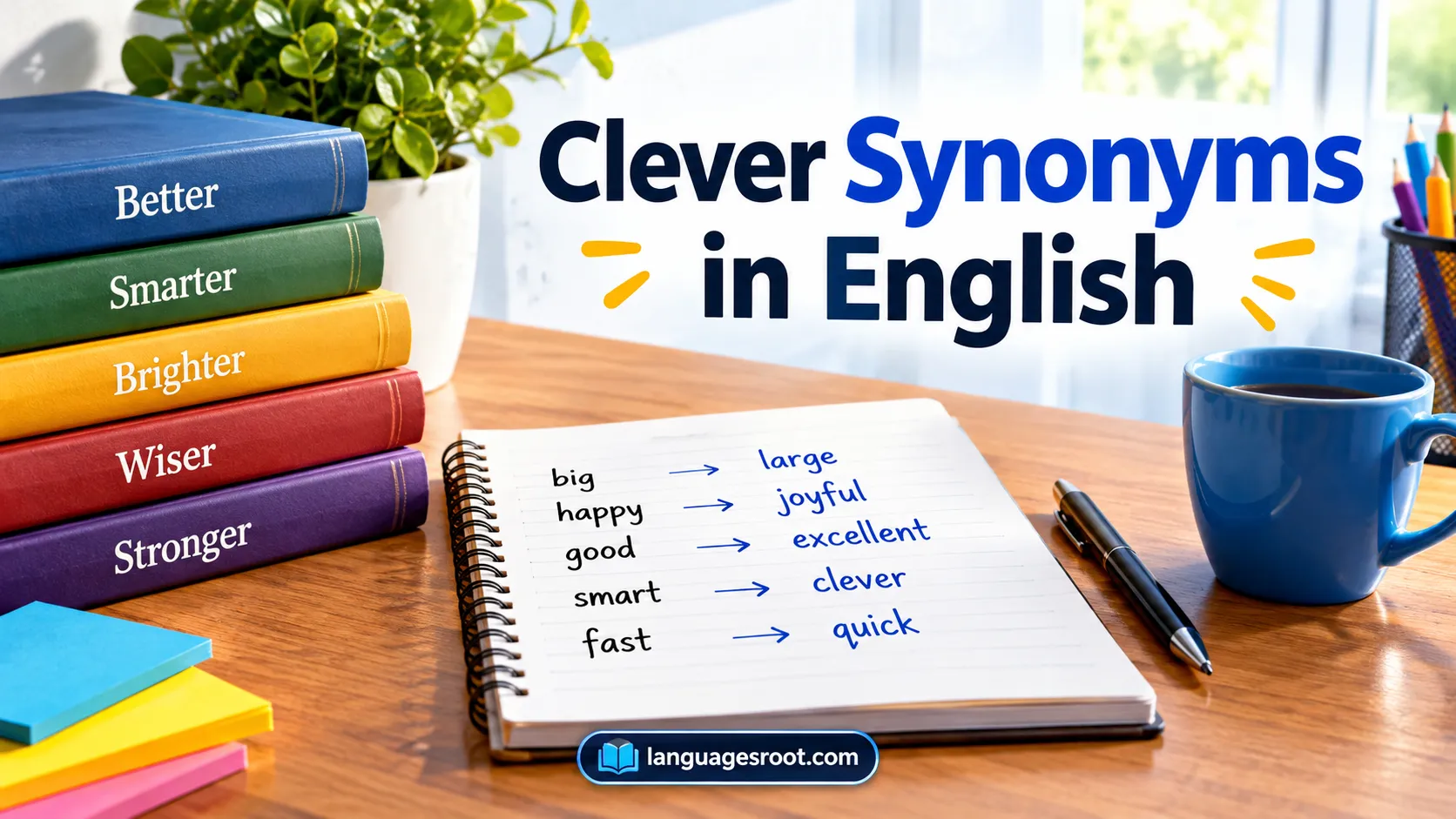
Depending on the context, you can replace clever with several related words:
- Smart
- Intelligent
- Bright
- Sharp
- Brilliant
- Brainy
- Quick-witted
- Wise
- Astute
- Shrewd
- Skillful
- Talented
- Resourceful
- Inventive
- Creative
- Crafty
- Knowledgeable
- Insightful
- Quick-thinking
- Gifted
These words are not always perfect replacements. For example, brilliant can suggest an exceptionally high level of intelligence, while crafty can sometimes suggest cleverness used in a dishonest or tricky way.
How to Use “Clever” in a Sentence
The simplest use of clever is to describe a person’s intelligence.
For example:
“She is a clever student who learns quickly.”
You can also describe an idea:
“That was a clever solution to the problem.”
The word can describe something creative:
“He came up with a clever design.”
It can also be used as a friendly compliment:
“That was clever!”
When translating this expression, context is important. A translator may choose a word meaning smart, intelligent, skillful, ingenious, or quick-witted depending on what the speaker wants to communicate.
Clever vs. Smart vs. Intelligent
Although these words are closely related, they are not completely identical.
Clever often suggests quick thinking, creativity, or an ability to find solutions. It can sound friendly and conversational.
Smart is extremely common in American English and can refer to intelligence, good judgment, or practical ability.
Intelligent is more formal and directly describes a person’s mental ability.
For example, you could say:
- “She is clever.” This suggests quick thinking or creativity.
- “She is smart.” This is a broad everyday compliment.
- “She is intelligent.” This sounds more formal and directly emphasizes intelligence.
Why Learn How to Say “Clever” in Different Languages?
Learning words such as clever in different languages can make communication more interesting and respectful. It allows you to compliment someone naturally when speaking with international friends, classmates, coworkers, or language partners.
It also helps language learners understand cultural differences. A dictionary may provide one translation, but native speakers may use several words depending on the situation. Learning those variations gives you a better understanding of how the language works in real conversations.
For travelers, multilingual vocabulary can make simple interactions more enjoyable. For writers and students, understanding different expressions can provide useful cultural context. Even learning one new word can help build curiosity about another language and its speakers.
Tips for Pronouncing “Clever” in Different Languages
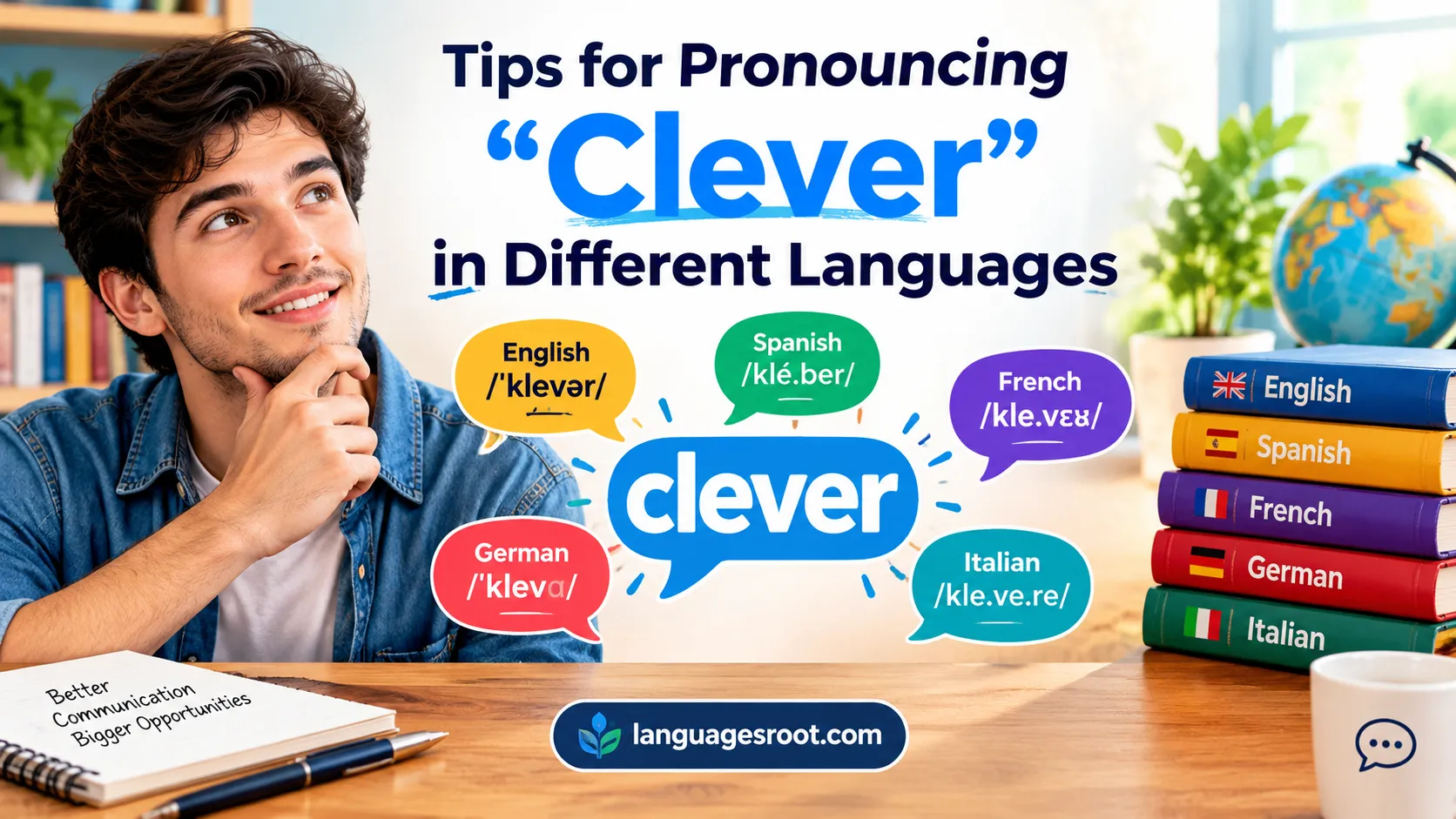
Pronunciation can vary significantly between languages. Some languages use sounds that do not exist in English, while others use tones or different stress patterns.
When learning a new translation, listen to native speakers whenever possible. Pay attention to the number of syllables, stressed sounds, and vowel differences. Do not assume that a word written in Latin letters sounds the same way it looks in English.
For languages such as Mandarin Chinese, pronunciation also depends on tones. In Japanese, Korean, and many other languages, rhythm and syllable patterns can differ from English. Practicing slowly before using the word in conversation can help you become more confident.
Frequently Asked Questions
How do you say “clever” in different languages?
You can say clever in different languages with words such as Spanish inteligente, French intelligent, German klug, and Japanese 賢い. The best translation depends on the language and context.
Is “clever” the same as “intelligent”?
Not always. Clever often suggests quick thinking, creativity, or problem-solving, while intelligent focuses more directly on mental ability.
What is “clever” in American and British English?
In British English, clever is a common everyday compliment. In American English, smart is often more common when describing someone’s intelligence.
Does every language have one exact translation for “clever”?
No. Cultural differences and contextual meaning can affect the natural translation. Some languages use different words for intelligence, wisdom, skill, or creativity.
How can I learn “clever” in different languages easily?
Start with a few common words, then practice their pronunciation, synonyms, and example sentences. This approach supports language learning and vocabulary building.
Conclusion
Learning how to say clever in different languages shows how intelligence, creativity, and quick thinking can vary across cultures. By learning each translation, pronunciation, and contextual meaning, you can build stronger vocabulary and communicate more naturally. These expressions also make language learning and meaningful conversations more engaging.